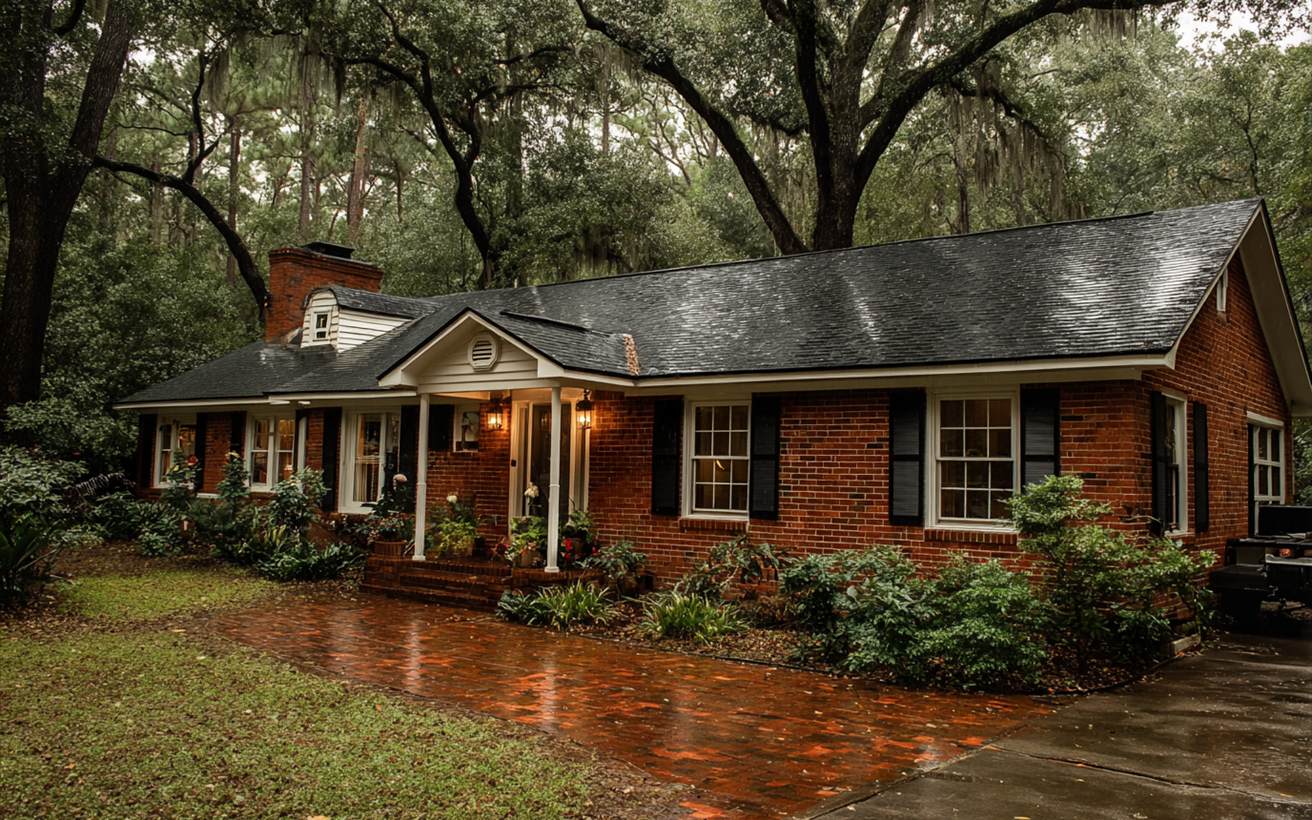
Ask three neighbors on the same street in Huntsville what they paid for a new roof and you may hear three very different numbers. None of them is necessarily wrong. A roof's price is built from its measurements, its shape, what's underneath it and what goes back on, and those vary from one house to the next. This page goes through the ten things that move the number most. It skips dollar figures on purpose: any figure printed here would be wrong for most roofs.
1. Squares, Not Square Feet of House
Roofers price by the square, a 10-by-10 patch of roof. The roof always measures larger than the house's living area, because eaves hang past the walls and a sloped surface covers more ground than a flat one. A long single-story ranch in Elkins Lake can carry far more roof than a two-story house with the same living space.
2. How Steep, How High
On a walkable roof, a crew moves fast. Past a certain slope, everyone needs harnesses and roof jacks, bundles have to be staged carefully, and each step takes longer. Height counts too: hauling debris down from a second story is slower than from a porch roof.
3. Layers Underneath
Texas houses sometimes carry a second layer of shingles laid over the first years ago. Every extra layer is more weight to tear off, more trips to the trailer, and a bigger disposal bill. Old coatings and heavy patching also slow the tear-off.
4. The Wood Nobody Has Seen Yet
The decking under the shingles stays hidden until tear-off day. Rot from a slow leak at a chimney, a valley or the lower edge of the roof has to be cut out and replaced before anything goes back on. That's why a sound contract names how many sheets are included and what each extra sheet costs.
5. Shape and Openings
Every valley, dormer, skylight, chimney and wall the roof runs into needs flashing and careful cutting. A plain two-sided gable goes fastest. A roof broken into many planes at different heights takes more labor per square and more metal.
6. What Goes Back On
| Choice | What it changes |
|---|---|
| Shingle line | Standard architectural, impact-resistant, or premium designer lines |
| Underlayment | Synthetic felt across the deck, and how much peel-and-stick membrane goes in valleys and at penetrations |
| Flashing | Reused or new metal at walls, chimneys and pipes |
| Ventilation | Ridge vent, soffit intake, and closing up old box vents |
| Decking type | Radiant barrier sheathing where decking is being replaced anyway |
| Metal panels | A separate price range from shingles entirely; see metal or shingles |
7. Getting to the Roof
A long gravel drive, a narrow side yard, a pool, flower beds against the walls or a sloping lot all change how a crew sets up and where the dumpster or trailer goes. Rural places a good drive out of town can add travel and hauling.
8. Timing
Spring and the weeks after a big storm are the busiest stretches for roofers in this part of Texas. A replacement that can wait sometimes gets more flexible scheduling outside those rushes. Rain and high wind stop tear-off, which can stretch any job.
9. Permits and City Rules
Some cities in the area require a permit or roofer registration for a reroof, and some don't. Ask who pulls it and whether the fee is included.
10. Insurance Claims
When a replacement follows covered hail or wind damage, your deductible, the adjuster's scope and any depreciation decide your out-of-pocket share. That share is a separate question from the roof's actual cost. More on claims: hail and wind claims.
Putting Two Bids Side by Side
Write both down in the same order: layers removed, sheets of decking included and the per-sheet price, underlayment, membrane, flashing, ventilation, the exact shingle or panel product, cleanup and magnet sweep, permit, and both warranties. When one bid comes in far lower, look for the line it left off.
Questions
Why won't anyone give me a price over the phone?
Because a fair number depends on measurements, slope, layers and the condition of the decking, and none of that shows up in a phone call. Someone has to see the roof and, ideally, the attic.
Should I just take the lowest bid?
Only after you've matched the two bids line for line. A low total that skips new flashing or a decking allowance can end up costing more.
Do impact-resistant shingles add much?
They cost more than standard shingles. Some Texas insurers give a premium discount for them, which can make up part of the difference over the years.
Around Huntsville
Prices swing the most between big, newer roofs around Conroe and older, cut-up roofs near Downtown and the Square. The job itself is on roof replacement.
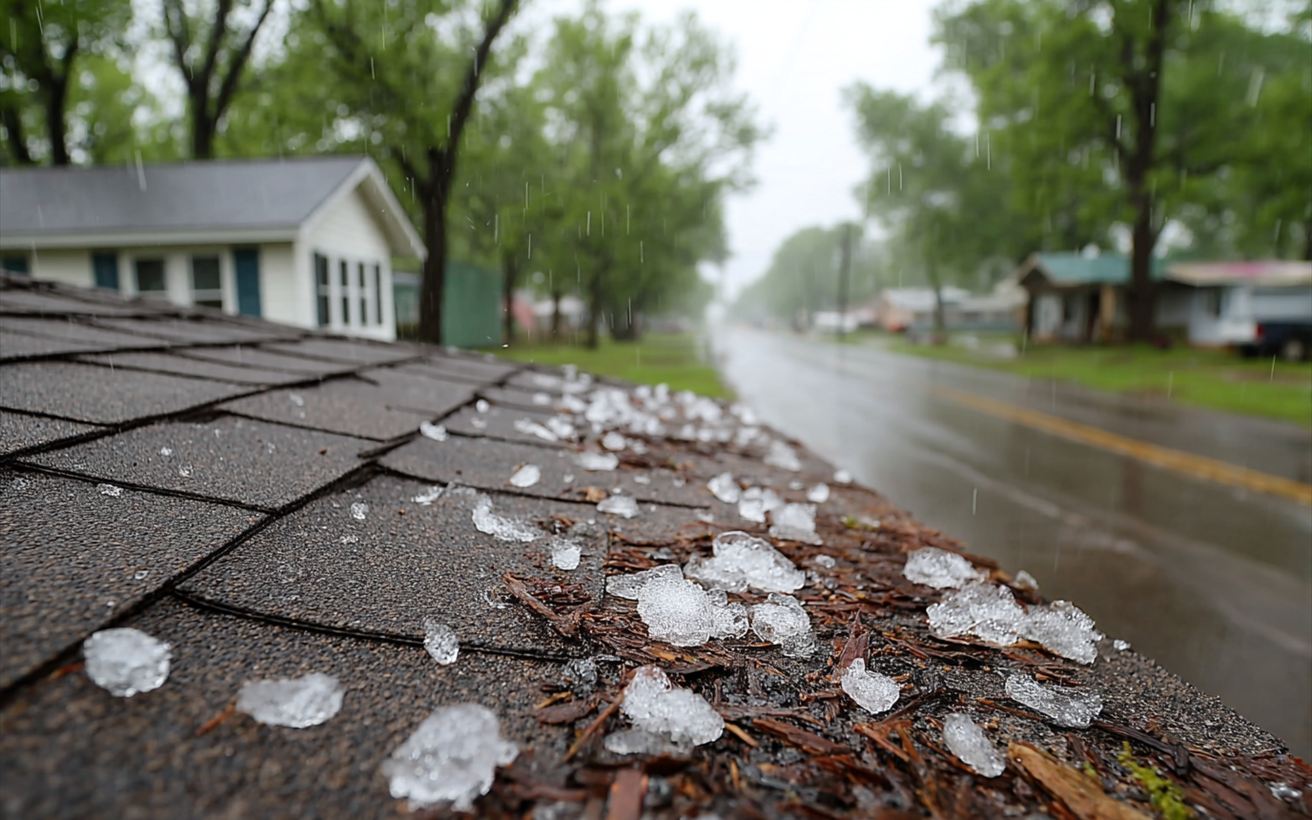
Hail and Wind Claims on a Texas Roof
Photos, deductibles and the adjuster's visit.
Checking a Texas Roofer When the State Doesn't License Them
Insurance, contracts and red flags.